
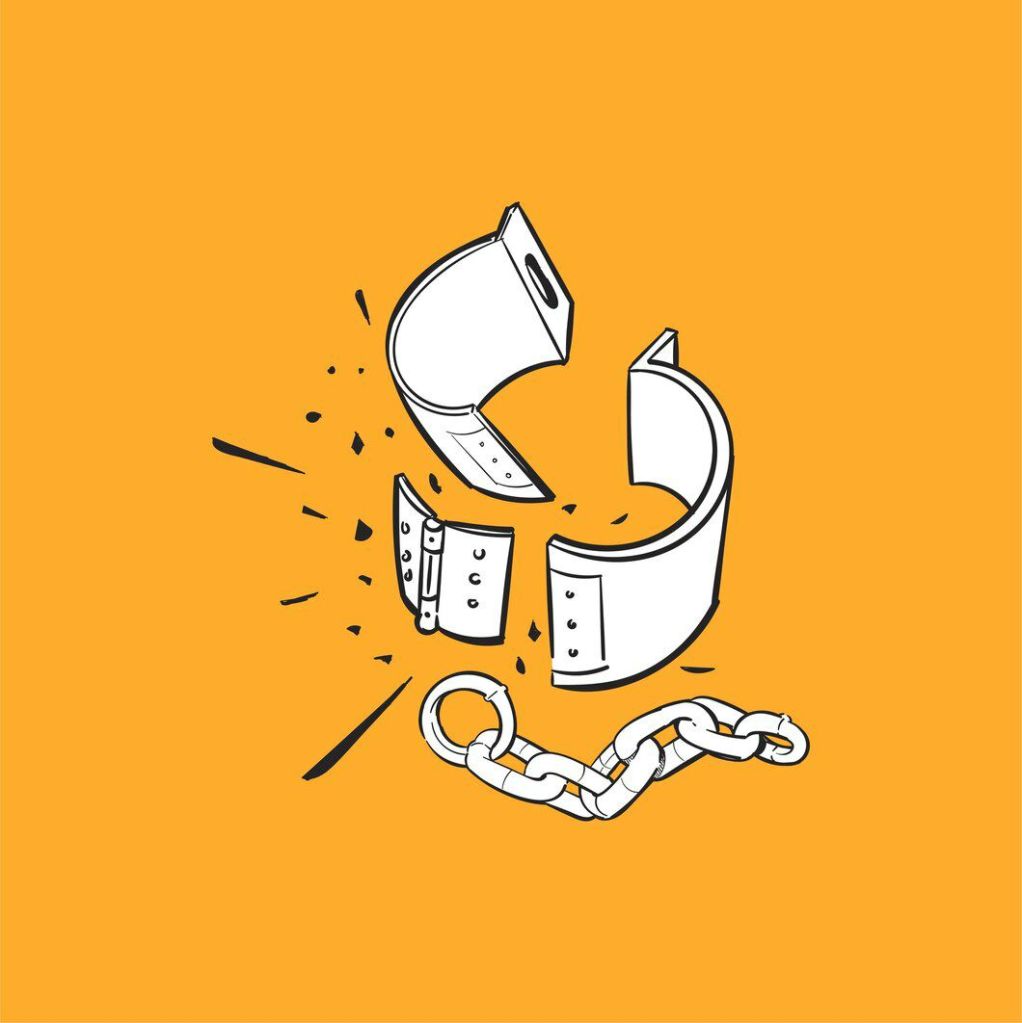
One of the greatest blessings God gave me is the gift of a good mentor. Whenever I struggled with tasks and returned with negative feedback, he would always remind me not to give up, showing me that there is always a solution. This mindset helped me tremendously, especially when I was battling addiction.
At a point, I realized if I didn’t stop, it would stop me. I sought help online but was shocked to find many claiming my addiction wasn’t harmful or that there was no way to heal or totally break free from it. It almost made me give up, because almost everyone around me was battling the same issue.
Later, I learned I wasn’t asking the right questions. Breaking free from addiction requires more than just a desire—it needs the right principles and guidance. In this article, I’ll share the insights I’ve gained on breaking free and the deeper purpose behind addiction, in this article, we would look into the following:
- Addiction as a disease, the root of this disease
- The purpose of addiction
- The REA principles
- How to break free from this disease.
ADDICTION AS A DISEASE, THE ROOT OF THIS DISEASE.
First and foremost, it is important to understand that addiction is a disease. It is not a curse, a cultural norm, or a lifestyle choice; rather, it is a disease, a form of emotional misbehavior.
American Society of Addiction Medicine (ASAM) defined addiction as a treatable, chronic medical disease involving complex interactions among brain circuits, genetics, the environment, and an individual’s life experiences.
The root of addiction
Some argue that addiction stems from a lack of purpose. Others believe it is a demonic influence. However, I personally believe that the root of addiction goes much deeper.
Addiction is a form of emotional misbehavior; it does not arise out of nowhere. In our previous article “Why do people get high”, we explored the stages leading to its development.
- Terrible circumstances
- Emotional injuries and then
- Emotional misbehavior.
Claiming that addiction stems from a lack of purpose excludes pre-teens—those still in the early stages of life before discovering their purpose. On the other hand, if we are to attribute its origin to demonic influence, it raises the question: If demons can influence whoever they want, why then are some people not batling with any addiction?
The root of addiction is simply overwhelming circumstances. These circumstances often leave individuals with emotional injuries which, if not detected and addressed early, lead to various forms of emotional misbehavior, which people tend to manage with their different forms of addictions.
Terrible circumstances:
Example: abuse—be it sexual, verbal, or physical—can come from parents, siblings, friends, or a spouse. Other factors include poverty, illiteracy, physical deformity, harmful beliefs forced on us as children, the environment we were raised in, or the death of a loved one.
Emotional injuries:
Low self-esteem, self hate, over dependency, over protective mindset, trust issues, low or zero self worth, people-pleasing, rejection, fear, anxiety, etc.
Emotional misbehavior:
All sorts of sexual perversions, substance abuse, addiction of all kinds, abusing others, toxic behaviour, pedophile, chronic selfishness, depression, suicidal thoughts, etc.
PURPOSE OF ADDICTION
I strongly believe that understanding the purpose of addiction can motivate us to desire freedom and healing from this disease. The sole purpose of addiction is to hinder individuals from achieving their goals and fulfilling their purpose—whether it’s spiritual, familial, career-related, or business-oriented. It obstructs the path to all the goals we set for ourselves.
Human beings are special, created in God’s image to fulfill a unique purpose. The enemy (the devil), aiming to prevent people from reaching their potential, heavily invests in addiction—a disease of the soul that hinders individuals from becoming who they are meant to be, causing them to live below their capacity and settle for less.

THE R.A.E PRINCIPLES
The R.A.E Principle is the stages people pass through while battling with any form of addiction.
R- Rejection
A- Acceptance
E- Embracing
NB: These stages do not exactly occur simultaneously in the life of every individual battling with addiction.
1. Rejection Stage: In the initial stage of addiction, victims often deny their struggle, both to others and to themselves. This self-denial is particularly harmful, as it indicates they are not yet ready to confront the disease.
2. Acceptance Stage: The next stage is accepting the reality of addiction. This stage is crucial for healing, as acknowledgment is the first step toward seeking help and beginning the recovery journey.
3. Embracing Stage: This dangerous stage occurs when, despite recognizing their battle with addiction, the individual chooses to live with it rather than seek help.
This principle is meant to highlight the stages of addiction, not to encourage complacency, but to emphasize the importance of not embracing the disease and instead seeking help.
HOW TO BREAK FREE FROM ADDICTION
Research has it that the increasing rate of divorce and relationship breakups in the future will be due to excessive social media consumption. This highlights that addiction is not limited to sex, alcohol, or drugs; social media addiction is also in this categoryof emotional misbehavior.
Addiction is rooted in the mind, which is why, unlike other diseases, it is particularly difficult to overcome. I am not implying that it is in any way easy to break free from —it is not. It is always involves a strong battle of the mind. However, the following three steps will help anyone who desires to break free from addiction.
- Strong desire to break free: For some, your struggle with addiction might have lasted 5, 7, or even 20 years. Your mind and body have gotten used to it, and while wanting to break free is great, if that desire isn’t strong enough to fight off the urge to go back, it’s only a matter of time before you’re stuck in the same cycle. And again, what you feed your mind is what you become. It takes a strong will to break free, to achieve this, a consistent, bold change needs to take place in one’s mind, with respect to what we feed our mind.
- Heal from any form of emotional injury you are suffering from: Having a strong desire to break free from addiction is beautiful, but if the vacuum – emotional injury – that lures you to this emotional misbehavior is not dealt with, you might not be able to stand the urge when it comes knocking.
- A counter force: The force behind addiction is a powerful one and if not countered with a stronger force will bring the victim to his/her feet in a disappointing manner. There are two of these counter forces used to fight addiction:
- Commitment to God: The power of God is a force stronger than the force behind addiction, but hearing about it and not commiting to God will not give you access to His power. We commit to Him through prayer, mortification and study of His word – so our mind will be renewed and rewired (Romans 12:2)
- Commitment to purpose: Purpose is powerful, discovering it is fulfilling but not committing to it is as good as not discovering it. If you commit to fulfilling your purpose, the power backing purpose will hinder you from addiction.
Some focus solely on their purpose, but when everything fails, only God’s power can truly save us. Instead of risking your dreams, embrace both purpose and spiritual strength.
Overcoming addiction and mental health struggles is a daily commitment. It requires surrendering to forces stronger than the addiction. Without this, relapse is likely, which is often worse. Total freedom comes from continuously relying on God and a strong mental health support system.

CONCLUSION
Addiction isn’t just harmful—it can be deadly. People without a clear purpose often lean on their addiction to get through the day, until it takes everything from them, including their life. Now, imagine young minds falling into this before they even discover their purpose.
We must protect the younger generation from addiction. It’s our duty to ensure our children and loved ones don’t face the same struggles that left us with lots of emotional injuries.
If you’re unsure about quitting, ask yourself, “What do I gain by continuing this harmful habit, and what do I gain by stopping?” Your future depends on this choice, so choose wisely.
 The beauties of life & family
What a great article we have here!
This is well detailed, clarity filled and yet straight to the point.
Addiction is really a deadly disease.
Unfortunately, most young people suffer from at least one.
From my observations, addiction stems from a place of constant ungodly desire.
It could be for a thing, person or an idea.
Which most times has a detrimental effects on it’s prey.
But by embracing the law of life in Christ Jesus, we’re saved from it’s chains.
The Bible let’s us tells to not conform to the standards of this world but be transformed by the renewing of our minds.
Meaning that to break free, we have to renew our minds.
Renewing our minds with the word of God.
The Bible says that the word is light to those who find it and health to their flesh.
Our minds are a magnet.
And it’s attracted to whatever feeds it.
Feed your mind with the right things.
LikeLiked by 1 person
Wow.
What a dept comment.
Thank you for your comment @Pearl
LikeLike